With significantly lower costs compared to chemical fertilizers, the outstanding advantages of biochar (biological charcoal) not only include soil improvement and enhancing the quality of agricultural products but also maintaining long-term effectiveness.
This was the general consensus among participants at the training session on "Application of Biochar in Soil Improvement" held on March 19 in Cu Sue commune, Cu M’gar district, Dak Lak province.
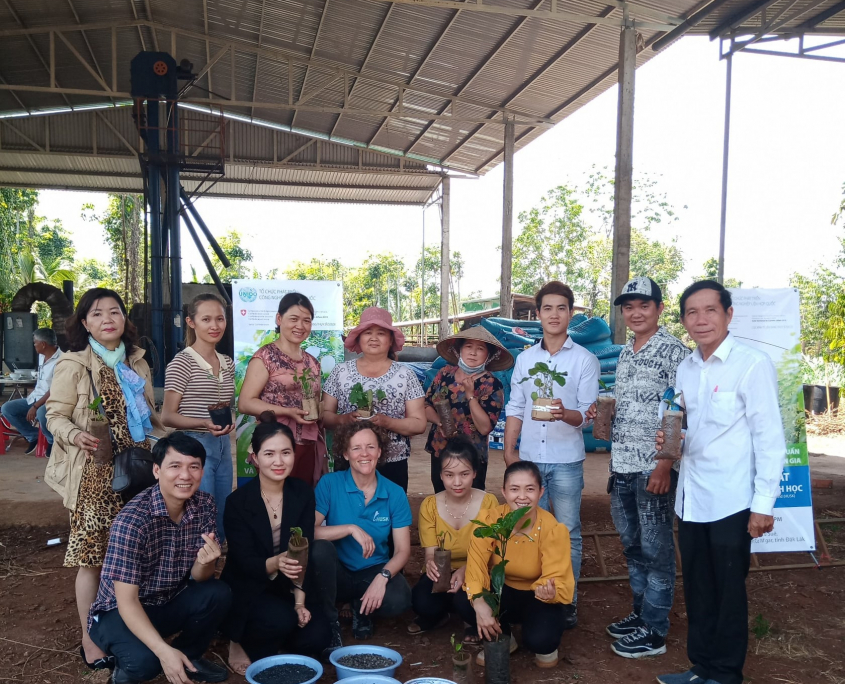
The training participants took a commemorative photo.
According to Ms. Heloise Buckland, CEO and co-founder of the HUSK organization (Spain), biochar is a product that has been used for thousands of years in the Amazon region and in recent years has been used in Asian and Southeast Asian countries to improve soil pH.
Research by the United Nations Industrial Development Organization (UNIDO) indicates that biochar can retain carbon content in the soil for up to hundreds of years. Just 1 gram of biochar can be used to improve 120 square meters of soil. On the other hand, traditional organic fertilizers made by farmers often do not retain carbon in the soil as they are easily washed away by rainwater in a short period.
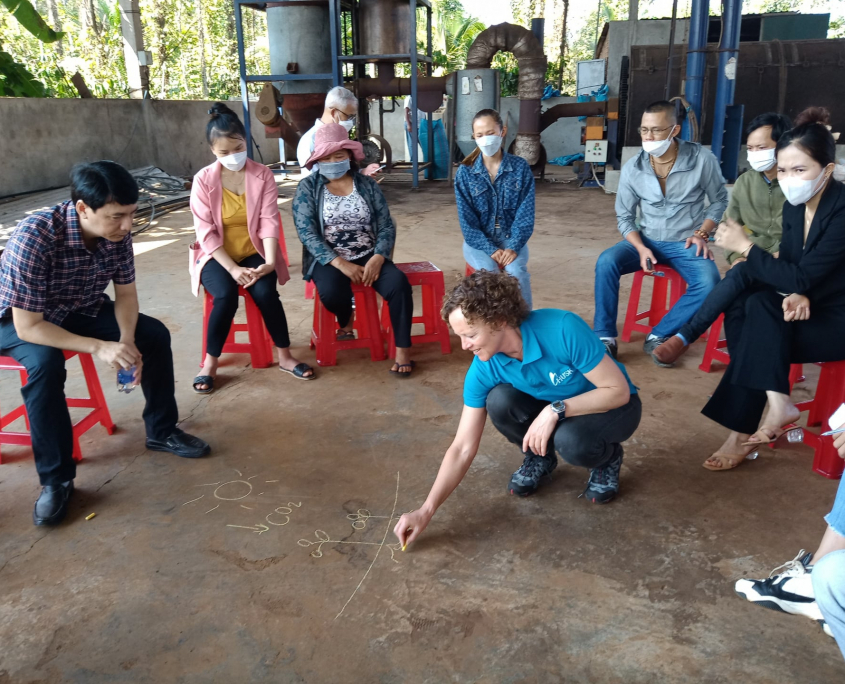
Ms. Heloise Buckland, CEO and co-founder of the HUSK organization (Spain), explained the mechanism by which biochar helps improve soil.
Meanwhile, plants require up to 60% carbon content in the soil to maintain healthy root development. However, it is estimated that globally, up to 30% of agricultural land has been degraded due to unsustainable farming practices. Therefore, biochar is the "key" to solving this problem effectively. When mixed into the soil, biochar helps improve soil structure, retains water and nutrients, and promotes the growth of microorganisms, creating ecological balance in the soil. Thanks to these advantages, farmers do not need to apply biochar continuously, unlike the current practice with chemical fertilizers.
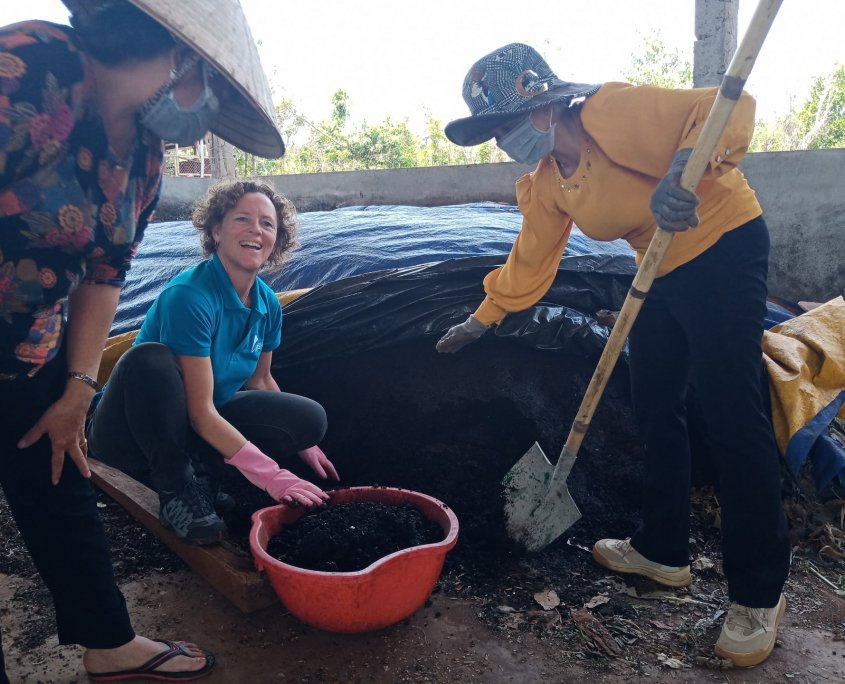
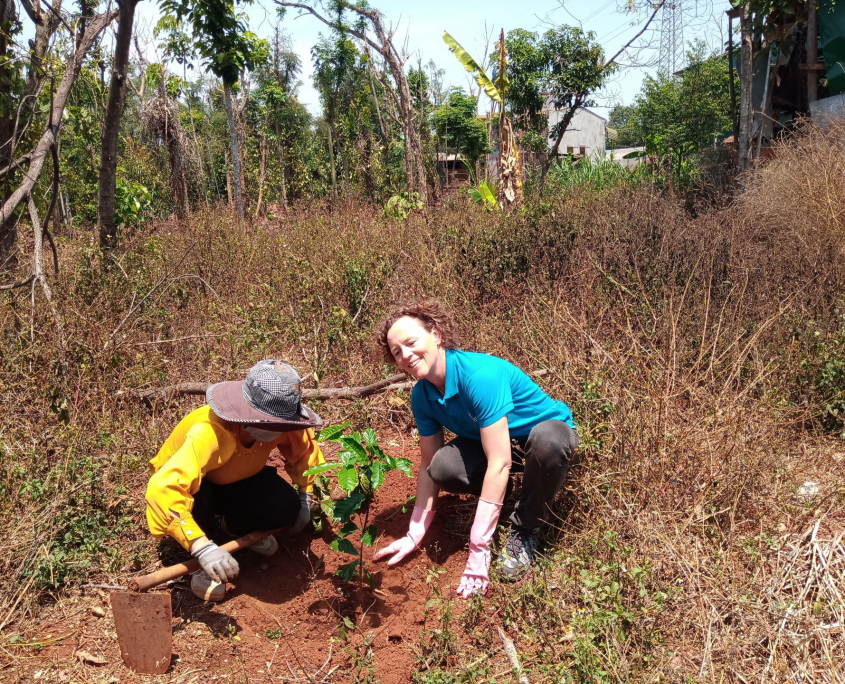
Ms. Heloise instructed on the use of biochar for crops.
"By using biochar, I have reduced the amount of chemical fertilizers by half each year. This not only helps cut costs, but my garden soil is also more friable, plants are lush and green, less prone to pests, and the quality of agricultural products is better, resulting in higher selling prices," shared Mrs. Dang Thi Cuc, a member of Binh Minh Cooperative.
According to Mrs. Trieu Thi Chau, Director of Binh Minh Cooperative, the outstanding advantage of the small-scale pyrolysis system PPV300 is that it not only produces biochar from agricultural residues and by-products but also helps farmers dry agricultural products like coffee during unexpected rains in the harvest season. Importantly, due to the anaerobic combustion process, CO2 emissions are not released, effectively addressing environmental issues.
Information about Pyrolysis Technology
From 2016 to 2019, the pyrolysis technology was successfully transferred from Switzerland to Vietnam by the United Nations Industrial Development Organization (UNIDO). This technology has the potential to convert agricultural waste (such as rice husks and coffee shells) into thermal energy and biochar. It increases the value of organic waste and agricultural by-products, providing economic opportunities for farmers and agricultural processors. The pyrolysis kiln technology allows for the timely and localized supply of biomass energy while meeting strict emission standards. Vina Viet Hien Co., Ltd. received support and successfully developed the small-scale pyrolysis system (PPV300) to pilot for cooperative models in Vietnam.
Tags: biochar, cải tạo đất, phân bón sinh học, than sinh học